Let’s Have a Conversation About Art & A.I.
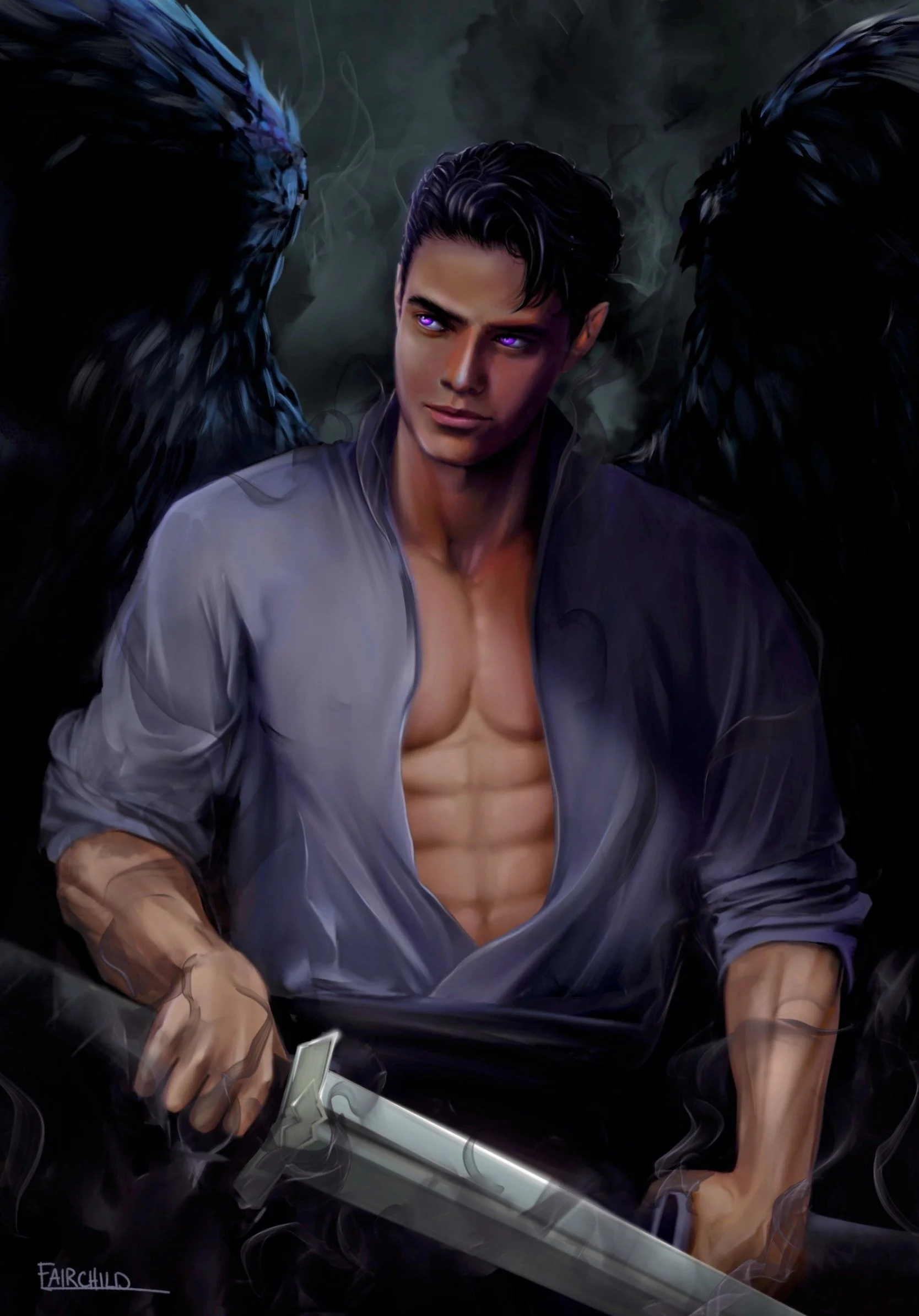
When I created this illustration of Rhysand from the ACOTAR series, it was an attempt to outdraw all the A.I.-generated pieces I was seeing by people claiming to be artists. For some reason, I felt this overwhelming need to compete. If I didn’t, I feared that I would become obsolete in a world where A.I. art was becoming more common, and I found myself questioning my place in an industry that was rapidly changing. But then I realized, I’m not alone. Traditional artists everywhere are grappling with the same doubts, questioning their value in a landscape where the lines between human and machine-made art are increasingly blurred.
To begin, I want to clarify that I'm not opposed to A.I. in general. In fact, I believe it’s a crucial part of humanity’s next evolutionary step. As technology continues to advance, A.I. holds incredible potential to transform how we live, work, and interact with the world around us. It has the ability to simplify our daily routines, automate mundane tasks, and give us more time to focus on what truly matters, our passions, our dreams, and the things that inspire us. In this sense, A.I. is not just a tool, but an enabler of progress, and I see it as a key player in the future of human development. I envision A.I. making a substantial impact in industries such as healthcare, where it can help reduce the overwhelming workload of doctors and nurses, drive forward medical research, and even facilitate life-saving advancements. A.I.'s potential benefits span across all sectors, and I strongly believe it can have a positive influence, even in my own field.
To further elaborate, and with full transparency, as I write this blog, I’m utilizing A.I. to assist me. I’m not a professional writer, and I often struggle to articulate my thoughts in words, which is why I typically rely on drawing to express myself. Writing isn’t my strongest skill, and without the budget to hire an editor, A.I. serves as an invaluable tool that bridges the gap. While I could ask a friend for feedback, we all have our own busy lives, and I don’t want to burden anyone with that. A.I. helps me refine my writing, ensuring it flows smoothly and makes the reading experience more enjoyable for all of you. It’s an extension of my creativity, helping me communicate ideas more effectively in a space where I’m not as naturally skilled.
However, this is where A.I. starts to become a point of contention for me, especially as an artist. The use of A.I. to generate art brings up difficult questions about creativity and authenticity. Art has always been a deeply personal expression of an artist’s emotions, experiences, and perspectives. It’s not just about the final product; it’s about the journey of creation, the struggles, and the moments of discovery. When A.I. steps in to generate art, it can dilute that personal connection. A.I.-generated art might lack the intentionality and unique perspectives that human artists imbue into their work. The emotional depth that arises from a human's direct involvement is hard to replicate. A.I. can produce impressive images, but there’s often an absence of the personal touch, the painstaking process, and the struggle that so many artists go through in bringing their work to life. This, in turn, can lessen the value of the creative process as a whole.
Additionally, there's a legitimate concern that A.I. could oversaturate the art world. With A.I. making it easier and faster to generate pieces, it might become more difficult for traditional artists to stand out. The sheer volume of A.I.-created works could make it harder for skilled, time-invested artists to gain recognition for their talent. More troubling is the potential devaluation of human-made art. Since A.I. can produce work quickly and at a fraction of the cost, it runs the risk of overshadowing art that requires years of training, technique, and dedication. If A.I. floods the market with art that is mechanically produced, we may start to view art as something that’s disposable or lacking in depth.
Yes, it can be argued that many people can’t afford art that costs significant amounts of money, and A.I. users are providing an affordable alternative for those looking for art. I understand that argument, but that doesn’t change the fact that crafting a clever prompt for A.I. to do all the work doesn’t make you an artist, it makes you a facilitator, at best. When you rely on A.I. to generate the entire artwork and do not put in any meaningful creative effort yourself, it’s not the same as traditional artistry. At best, A.I. users who take the time to edit and refine the A.I.-generated image using tools like Photoshop or Procreate, those who actually put in real effort to craft their vision, can rightfully claim the title of "Photo Editor." That title more accurately reflects the process they’ve gone through in shaping the final product.
So, I ask you: Where do we draw the line? What makes one an artist, and what is merely the product of a machine? As we navigate this new terrain, it’s crucial we recognize the value of human creativity and not lose sight of what makes art truly meaningful.
